

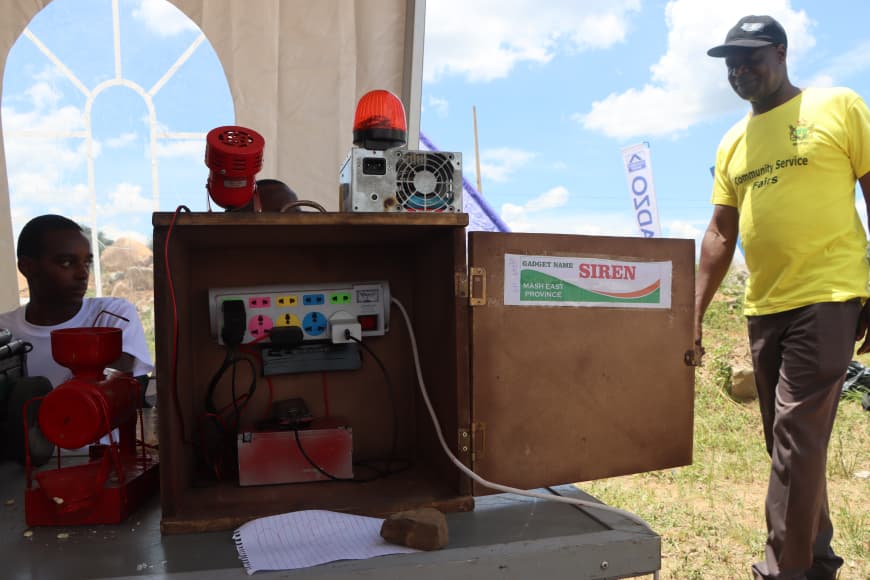
Student representatives from across Zimbabwe’s ten provinces demonstrated exceptional levels of innovation at the Sahwira Career Guidance Expo, signaling the country’s steady transition toward a skilled and industrially driven generation. The exhibition highlighted a clear shift from theory-based learning to practical, solution-oriented education—an essential pillar in Zimbabwe’s aspiration to attain upper-middle-income society status by 2030.
Among the standout innovations was a Smart Fumigator developed by students from Mashonaland West. The technology integrates a sensor system with a 3D mapping mechanism to detect affected areas within a farm. The sensor identifies the specific type of pest or disease and relays the information to a controller, who then deploys the appropriate chemical intervention. Operating as a motorized unit, the fumigator moves across the field and sprays only targeted areas, ensuring precision agriculture while minimizing chemical waste and environmental impact.
Another notable innovation was the Smart Mining Monitor (Geocore), showcased by students from Harare. Designed as a smart mining helmet, Geocore detects ground vibrations and incorporates a collision avoidance system to enhance miner safety. The device can sense early signs of mine collapse and alerts miners when approaching hazardous zones, particularly in low-light conditions. This practical innovation addresses real and persistent safety risks in Zimbabwe’s mining sector.
Students from Mashonaland West and Manicaland also impressed attendees with their Smart Irrigation System. The system operates using moisture-level sensors that automatically trigger irrigation when soil moisture falls below required levels. It features indicator lights that turn green when moisture levels are adequate and red when levels are low, although watering occurs automatically once the threshold is breached. In a country whose agricultural sector has faced irregular rainfall patterns in recent years, this innovation provides a timely and sustainable solution.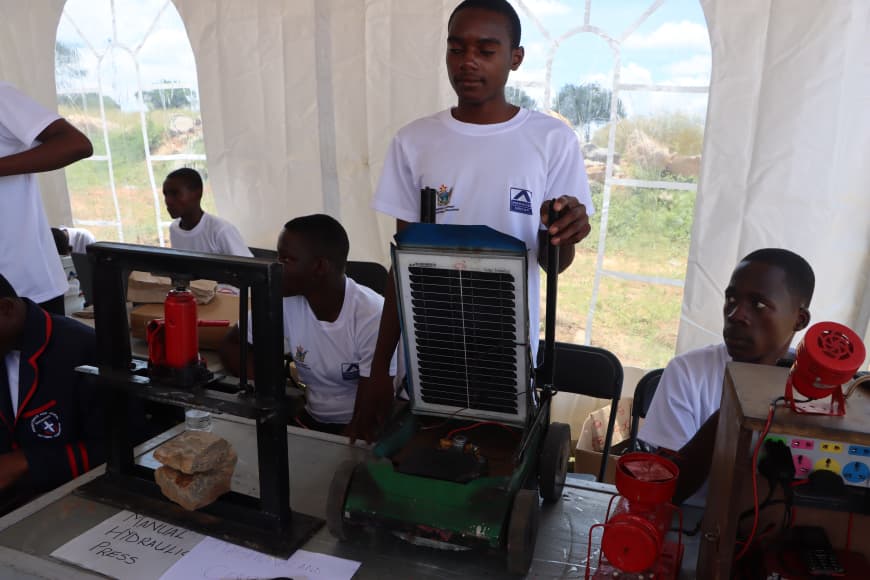
From Matabeleland North came a socially responsive textile innovation—reusable adult diapers. Recognizing that many elderly people in the province cannot afford disposable diapers, especially those requiring daily use due to medical conditions, the students designed comfortable, waterproof and reusable alternatives. This innovation not only reduces costs for families but also promotes sustainability.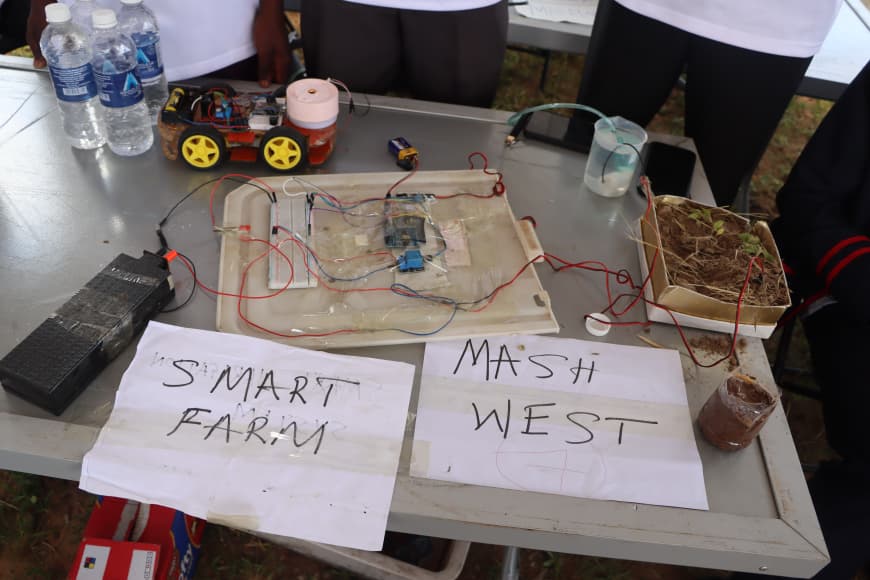
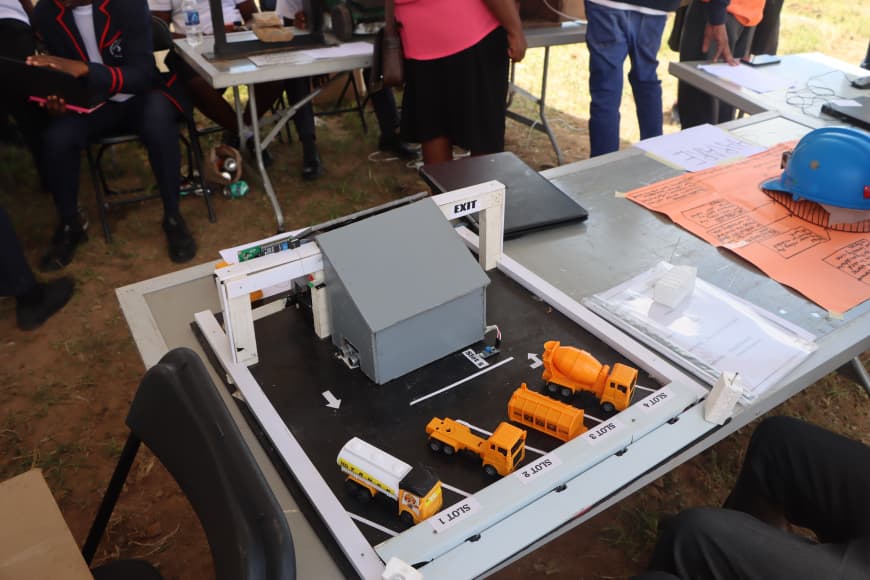
Other creations displayed at the expo included hydraulic press machines, auto-emergency switch designs, smart and flexible border management systems, solar-powered grinding mills, battery-powered lawn mowers, smart car parks and security systems. While some of these technologies are adaptations or improvements of existing designs, the significance lies in the fact that high school students were able to conceptualize and build them from scratch, demonstrating remarkable technical competence and creativity.
A key highlight of the exhibition was the students’ ability to develop innovations that directly address everyday challenges within their communities—from farming and mining safety to healthcare affordability and infrastructure management. With adequate financing and institutional support, such innovations could reduce Zimbabwe’s reliance on imported machinery and position local youth as future industrial leaders.
The Sahwira Career Guidance Expo has once again affirmed that Zimbabwe’s future is bright. As young innovators continue to translate classroom knowledge into practical solutions, the nation moves closer to building a skilled, self-reliant and industrialized economy driven by its own youth.